United InfoSystem
Cold-open fast homepage dashboard. Zero build tools, modular Web Components, native CSS Grid, dual-provider weather, and cross-tab storage sync.
United InfoSystem dashboard grid layout.
The cold-open browser dashboard. Sub-100ms first paint with native Web Components and zero build tools.
United InfoSystem (UIS) is a fast-booting, zero-dependency local browser homepage dashboard designed for instant responsiveness. It replaces the default browser new tab page, eliminating bundlers, package.json, build steps, and framework runtimes.
The application runs on a 12-column unit-based CSS Grid engine. Each component is an isolated native Web Component (Custom Element), dynamically loaded via browser-native ES module imports (import()). All configuration and operational state are maintained directly in browser localStorage with cross-tab reactive synchronization.
UIS includes real-time clock ticking, dual-provider weather integration (zero-config Open-Meteo as default plus OpenWeatherMap), bookmark management with automatic domain extraction, and a task item manager—all expandable into focused modal overlays with document.startViewTransition.
Timeline
Q3 · 2026
Scope
Modular Architecture
CSS Grid Layout Engine
Native Web Components
Cross-Tab Sync
Scale
Personal Homepage
Zero Dependencies
Native browser APIs for zero build overhead and immediate rendering.
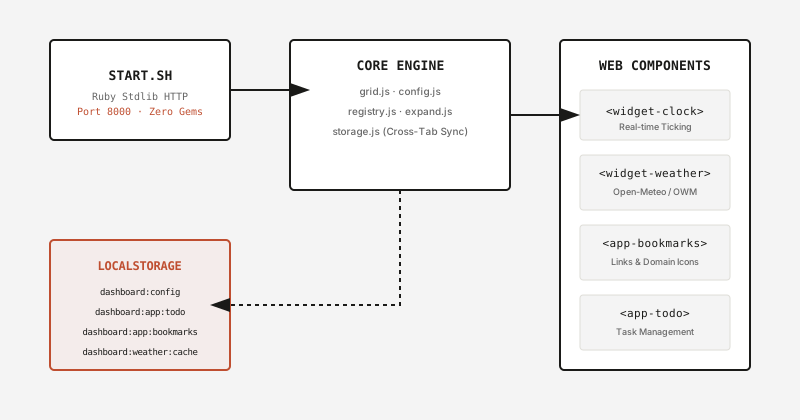
Engineered for instant boot and local independence.
By implementing modules (<widget-clock>, <widget-weather>, <app-bookmarks>, <app-todo>) as native Custom Elements extending HTMLElement, the dashboard eliminates framework bundle payload and virtual DOM diffing overhead. Lifecycle hooks (connectedCallback, disconnectedCallback) are provided natively by the browser platform.
The server executable (start.sh) uses standard Ruby libraries (socket, uri) with zero gems or package.json dependencies. It serves static files on port 8000 with explicit MIME types (including text/javascript required for ES modules) and path traversal security.
To prevent setup 404 errors and eliminate network round-trips during boot, ConfigManager detects missing configuration on cold boot and auto-generates the default 12-column grid and module arrangement in localStorage (dashboard:config) synchronously.
The weather widget defaults to zero-config Open-Meteo with Open-Meteo Geocoding API (geocoding-api.open-meteo.com), while offering optional OpenWeatherMap configuration via an inline modal setup dialog. Weather data renders cached readings immediately from dashboard:weather:cache before executing asynchronous background revalidation.
Subscribing to window.addEventListener('storage', ...) allows state mutations in any open dashboard tab to immediately reflect across all active browser windows without needing background web servers or WebSockets.
Sub-100ms dashboard at your fingertips.
United InfoSystem provides an exceptionally fast, distraction-free browser starting point. By combining native ES Modules, Custom Elements, CSS Grid layout, and local storage reactivity, the system delivers instant cold-open performance with complete offline capability for core widgets.
Impact
Sub-100ms first paint
Zero build dependencies
Cross-tab synchronization
Dual weather providers
Modular Custom Elements
Next
Updates RSS/Web app
Audio digest pipeline
Layout drag-and-drop